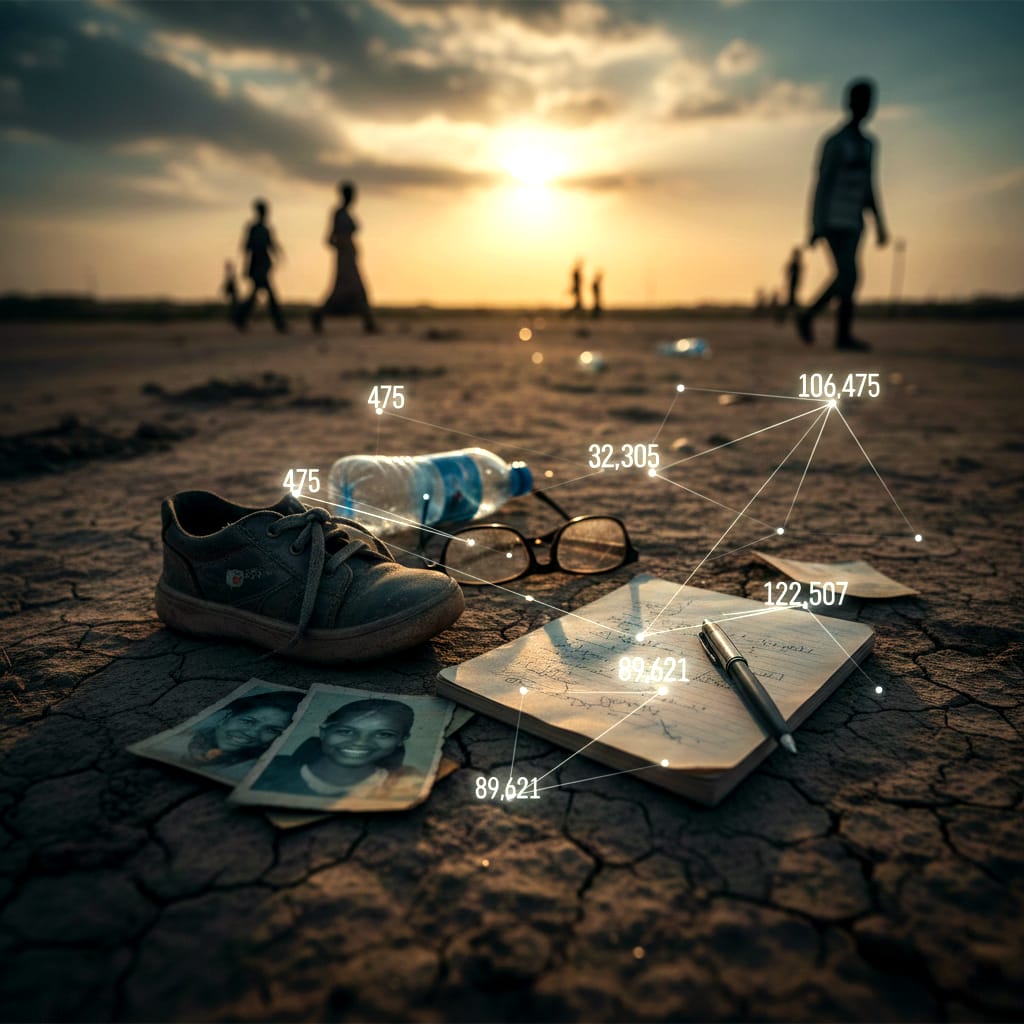
Since the outbreak of the conflict in Sudan, the losses have not been mere numbers, but human lives, rights, and property lost or violated.
However, documenting what can be documented reveals the scale of the tragedy, even in its most basic form.
According to the data that has been monitored and documented so far:
• 106 assaults on persons?!!!
• 475 reports of missing persons?!!!
• 32,305 cases of attacks on property?!!!
• 89,621 vehicles looted?!!
• Total: 122,507 documented cases?!!!
It must be emphasized that these figures do not represent the true extent of the violations,
but only what victims or witnesses were able to report, under conditions of fear, displacement, and lack of safe access to documentation methods.
The weakness of some entities, and sometimes even allegations of complicity, further complicate matters.
Why is documentation important?
Because what is not documented:
Is denied
Is erased
Is forgotten
And justice is not built on memory alone, but on evidence.
In the call for humanity, we do not merely collect numbers, but work to:
Document civil testimonies according to human rights standards
Classify violations in accordance with international humanitarian law
Preserve digital evidence confidentially and securely
Refer legally admissible cases to specialized bodies and lawyers
Coordinate with international human rights organizations to support accountability pathways
We do not promise quick results,
but we work to prevent the loss of rights through the statute of limitations or oblivion.
A final message
Victims do not ask for pity,
but rather for what happened to them to be acknowledged…
And for the path to justice to be opened, however long it may take.